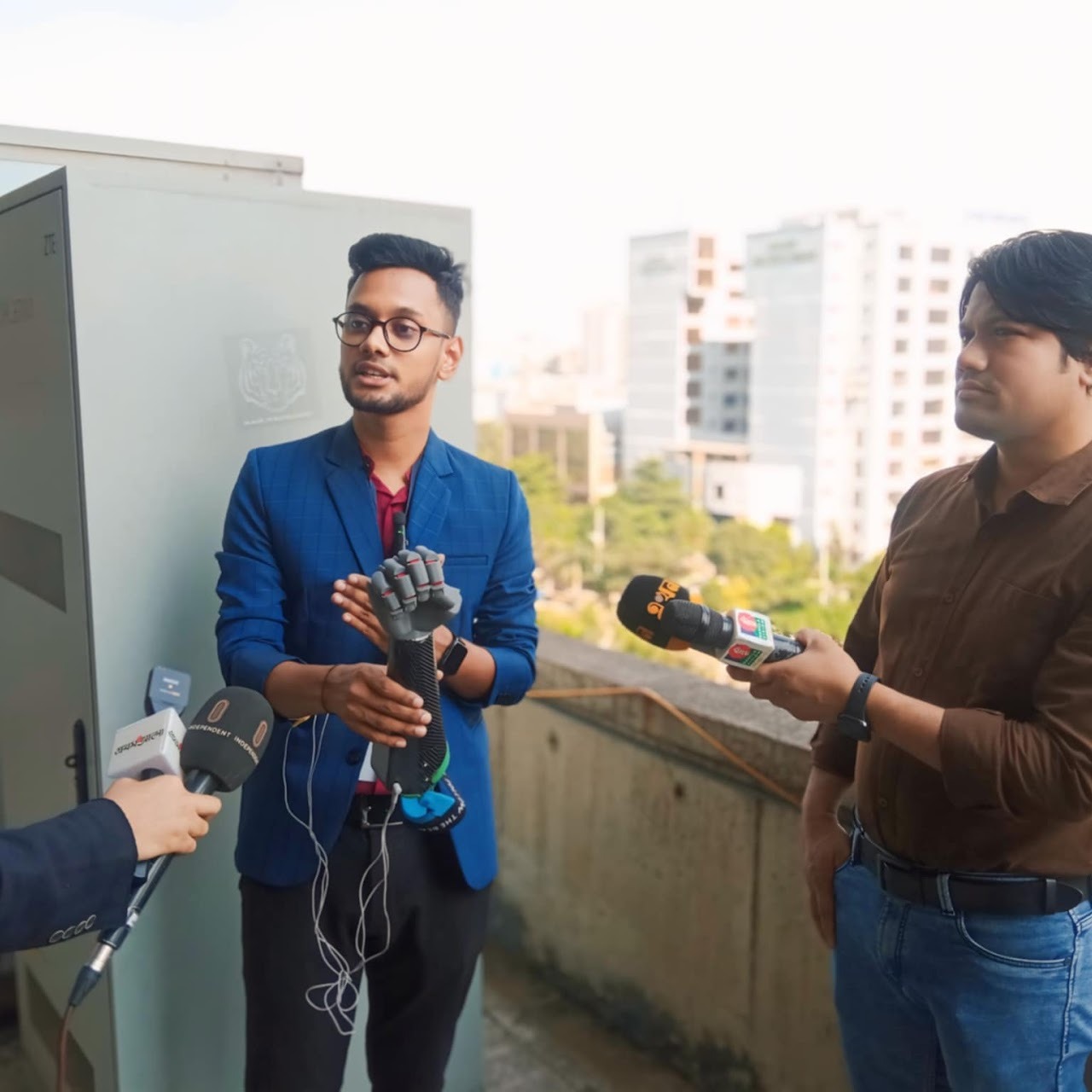
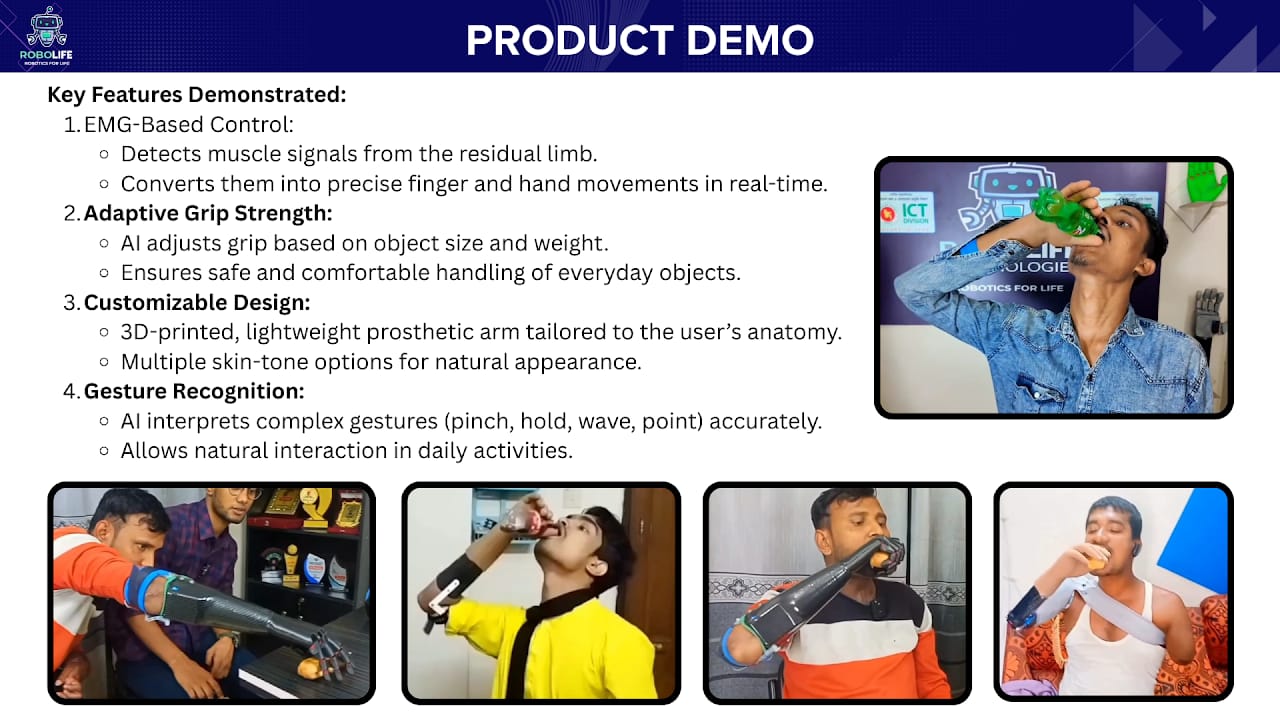
A revolutionary EMG and SMG-controlled prosthetic arm utilizing AI-driven signal processing to bridge the gap between biological intent and mechanical action. Priced at 95% less than traditional bionic solutions.
Millions of amputees worldwide face prohibitive costs and limited access to functional prosthetics. Traditional bionic arms remain a luxury, creating a massive healthcare disparity.
Amputees Worldwide
Due to diabetes, trauma, conflict injuries, and accidents, prosthetic limb market is crossing multibillion-dollar mark. Growing populations in developing nations face significant barriers to healthcare access.
Prosthetic Arm Cost
Existing solutions are either low-cost with minimal functionality or advanced but extremely expensive and complex. Most users abandon devices due to imperfect control and high maintenance costs.
Access in Developing Countries
In developing countries, no more than 5-10% of amputees gain access to effective solutions. High costs and limited availability create significant barriers to adoption.
Democratizing bionic technology through smart engineering, AI-driven signal processing, and innovative cost-reduction strategies.
Combining EMG and SMG (muscle sound imaging) sensors for robust intent recognition. Machine learning decodes multimodal bio-signals for instinctive prosthetic interactions.
Spring-lock mechanism enables zero-energy static grip, extending battery life. Power consumption analysis shows up to 90% reduction compared to traditional designs.
Layer-based system provides individual practical experience. Software-centric design reduces mechanical complexity and maintenance costs significantly.
Priced between $850-$1,000 instead of $10,000-$50,000. Cost-effective yet strong materials ensure durability without compromising lifespan.
Breaking Economic Barriers
Traditional Bionic Arm
$10,000-$50,000
ReDefiArm
$850-$1,000
95% Cost Reduction Achieved
Making bionic technology accessible to millions in underserved populations. A B2B2C commercialization model enables rapid growth through prosthetic device manufacturers, hospitals, and rehabilitation networks.
A sophisticated yet practical system combining hardware innovation with cutting-edge AI/ML algorithms for reliable, real-time prosthetic control.
Combines Electromyography (EMG) and Sonomyography (SMG) sensors for unprecedented reliability. Provides robustness against sweat, electrode displacement, and skin impedance changes.
Machine learning processes biological signals through noise filtering, feature extraction, and pattern classification. Translates data to control grip, release, and movement.
Spring-lock mechanism enables zero-energy static grip, dramatically extending battery life compared to traditional prosthetics. Achieving 90% energy efficiency gain.
A passionate team from Sylhet, Bangladesh, combining technical expertise with social impact focus. Driven by a mission to restore independence and dignity.
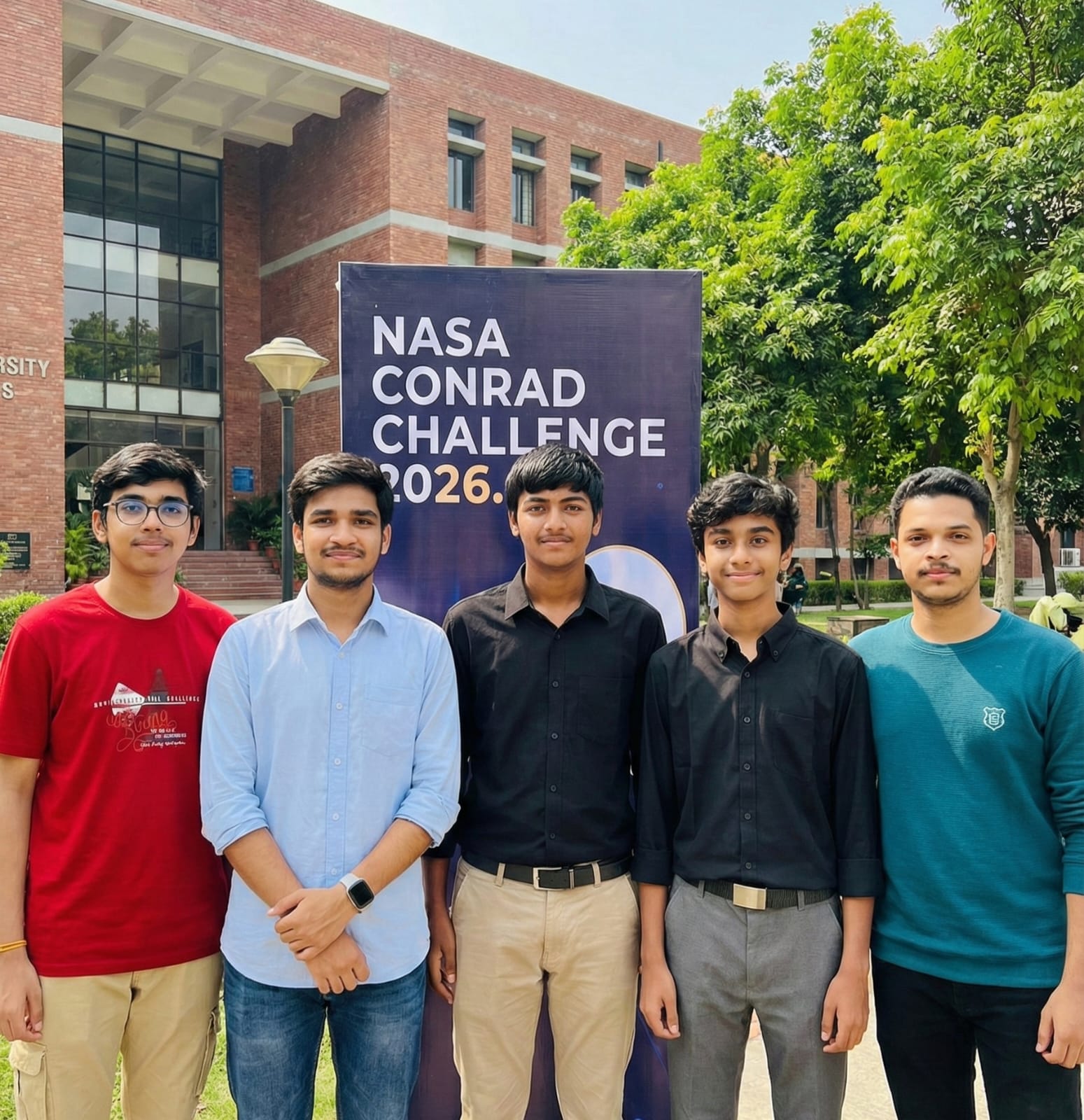
Sylhet, Bangladesh
Technical Advisor & Mentor
Provides expert mentorship on robotics architecture, sensor fusion algorithms, AI/ML integration, and competition strategy. Previously advised multiple award-winning STEM projects.
Team Lead & Robotics Development
Leads robotics development and technology research. Driven by personal mission to help friend Salman Ahmed and millions like him.
Robotics & Market Analysis
Contributes in robotics and directs market analysis, business strategy, and research communications.
Technical Documentation & 3D
Manages technical documentation and 3D modeling.
Presentation Design
Focuses on presentation design and storytelling.
Content Development
Oversees draft, website, and video content development.
Driven by Compassion and Innovation
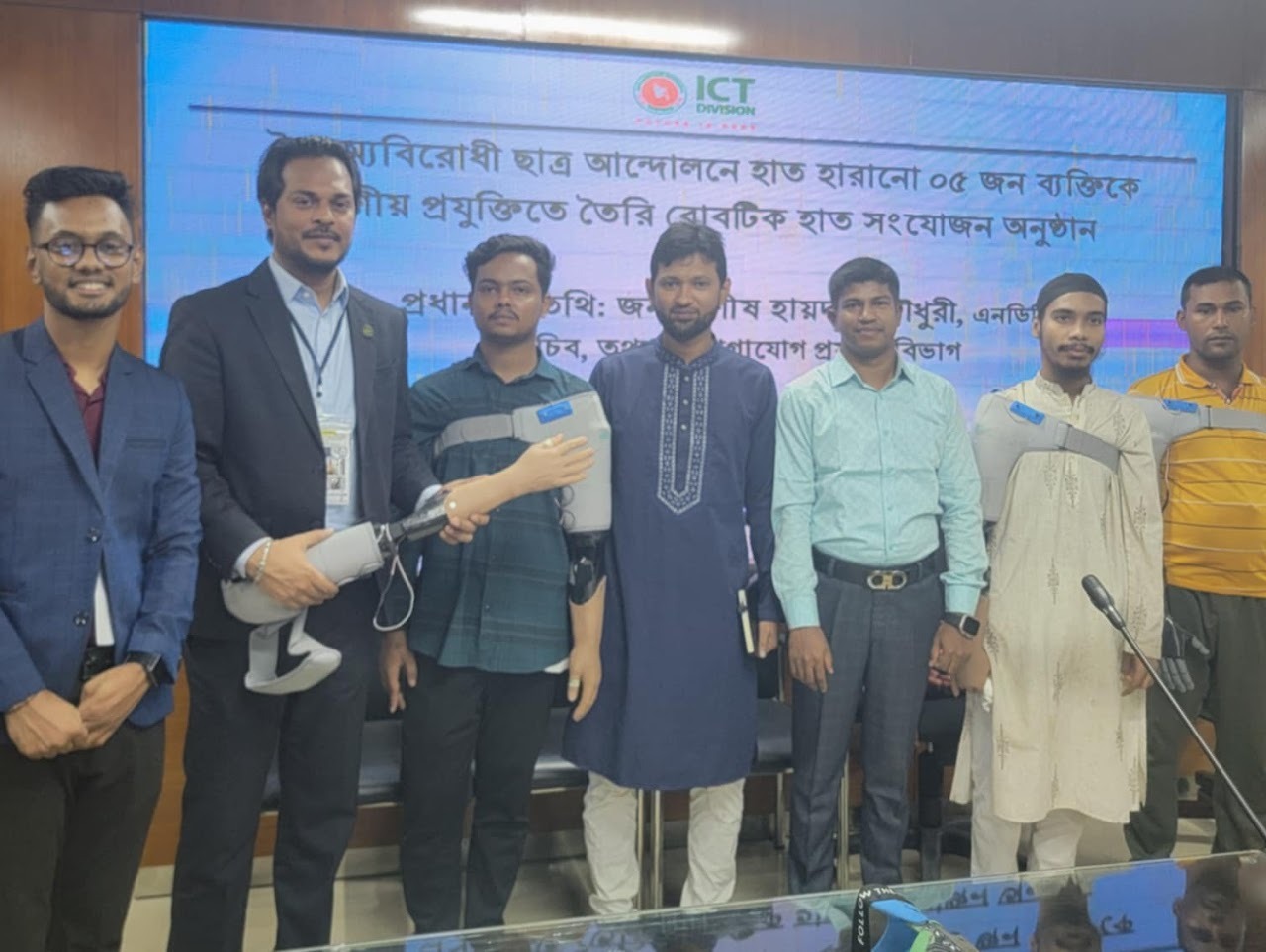
The group was formed as a result of team leader's passion to solve the suffering of his friend. Team leader Washiun Alim took a close look at struggles faced by his friend, "Salman Ahmed," both mentally and physically, after his upper limb was amputated. This direct human experience triggered him to investigate the global shortage of prosthetics that can actually restore people's emotions after limb loss.
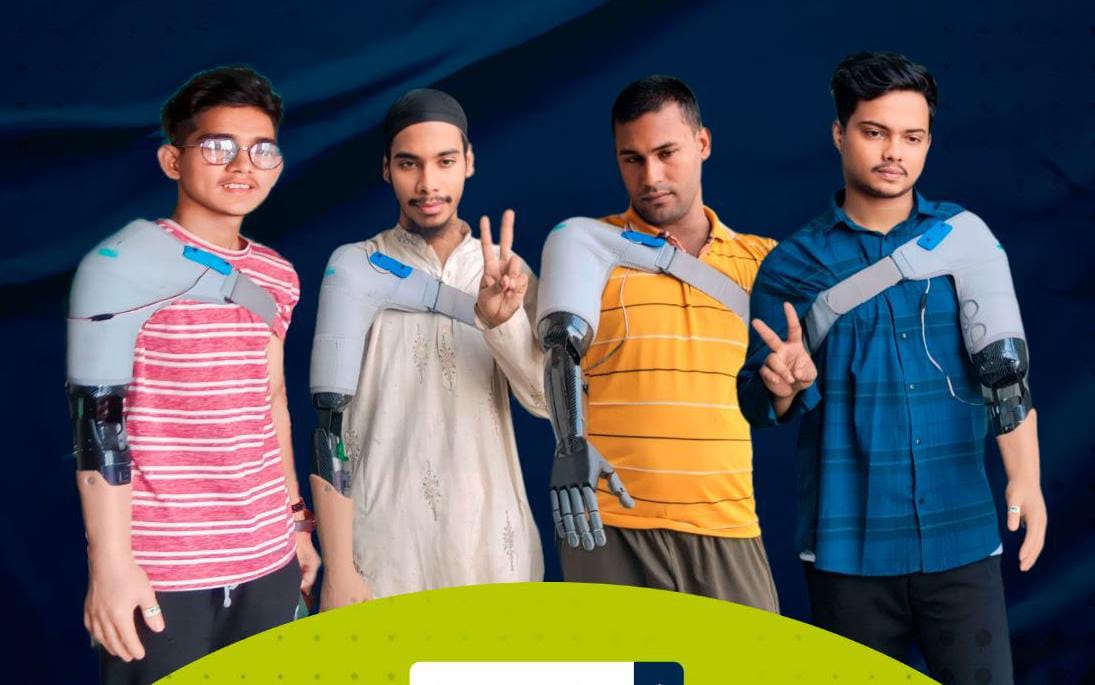
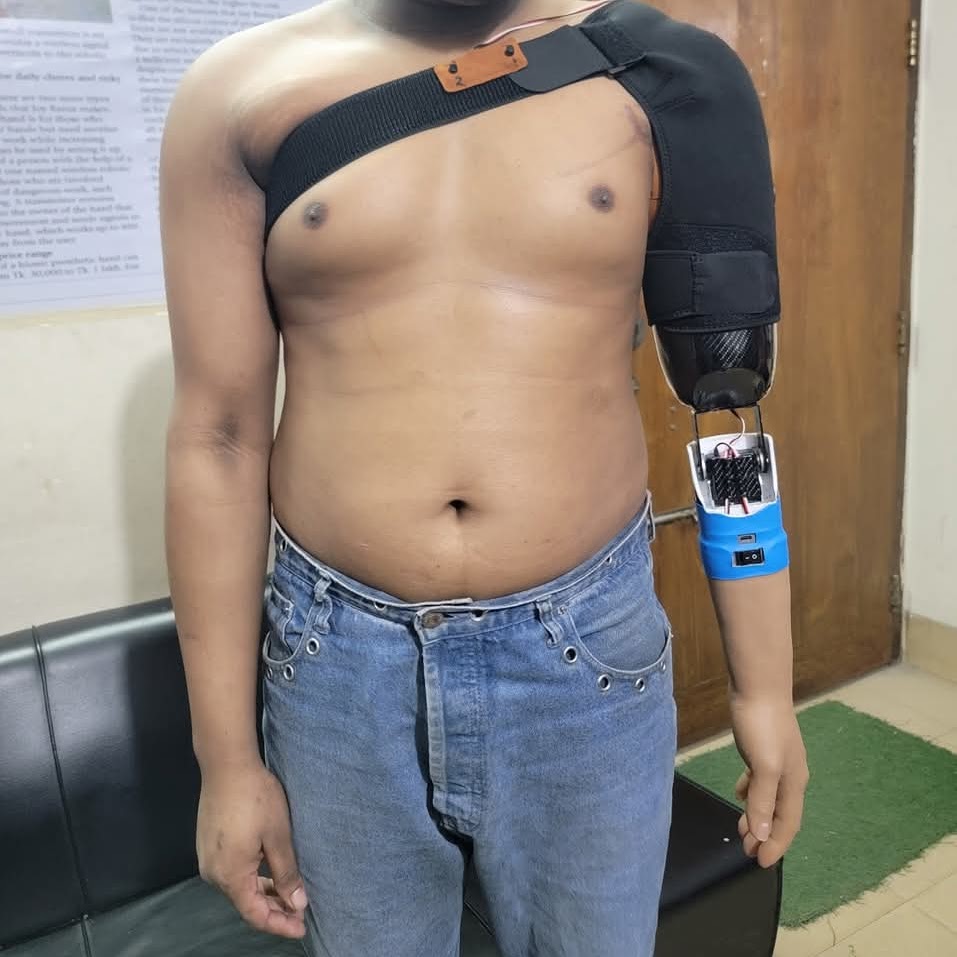
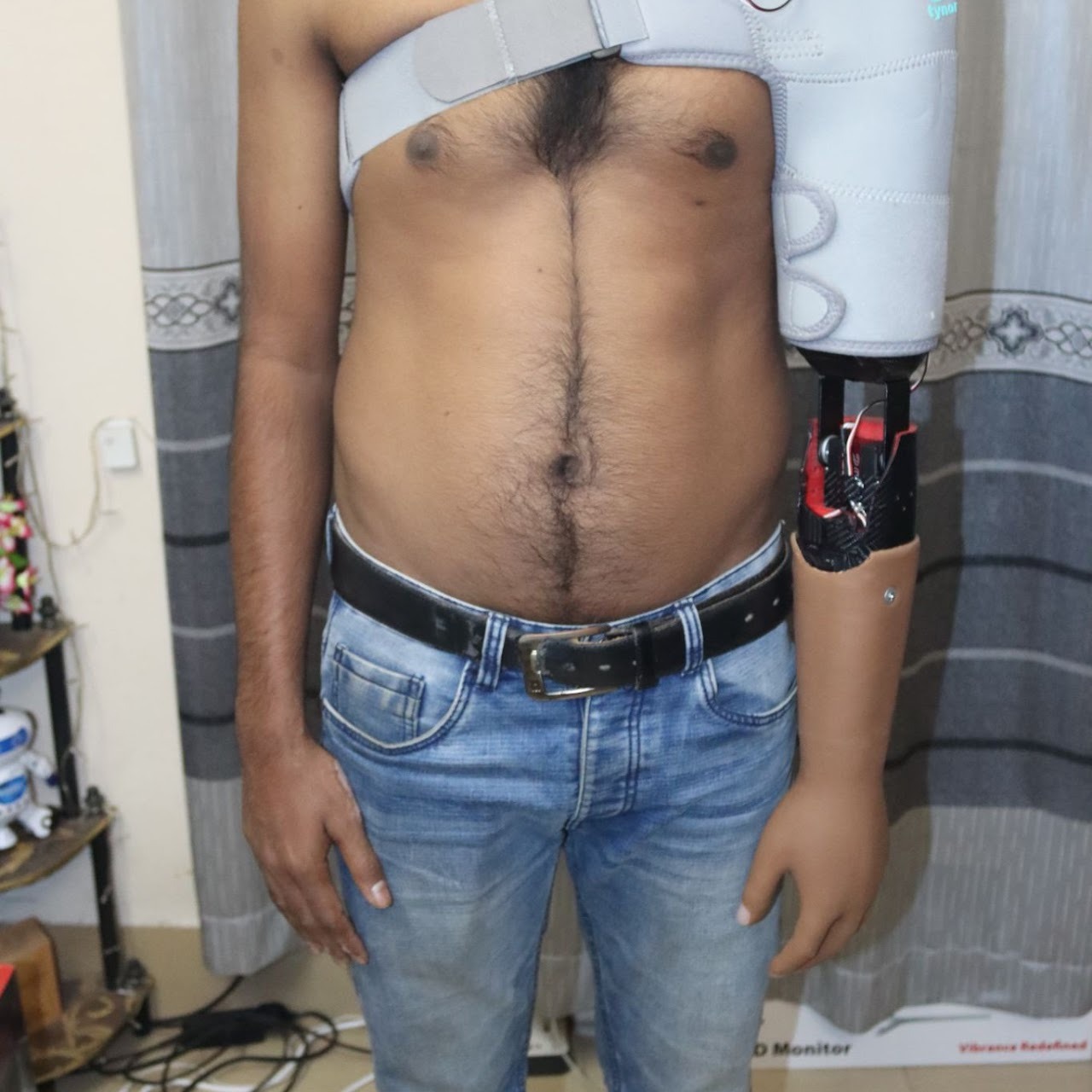
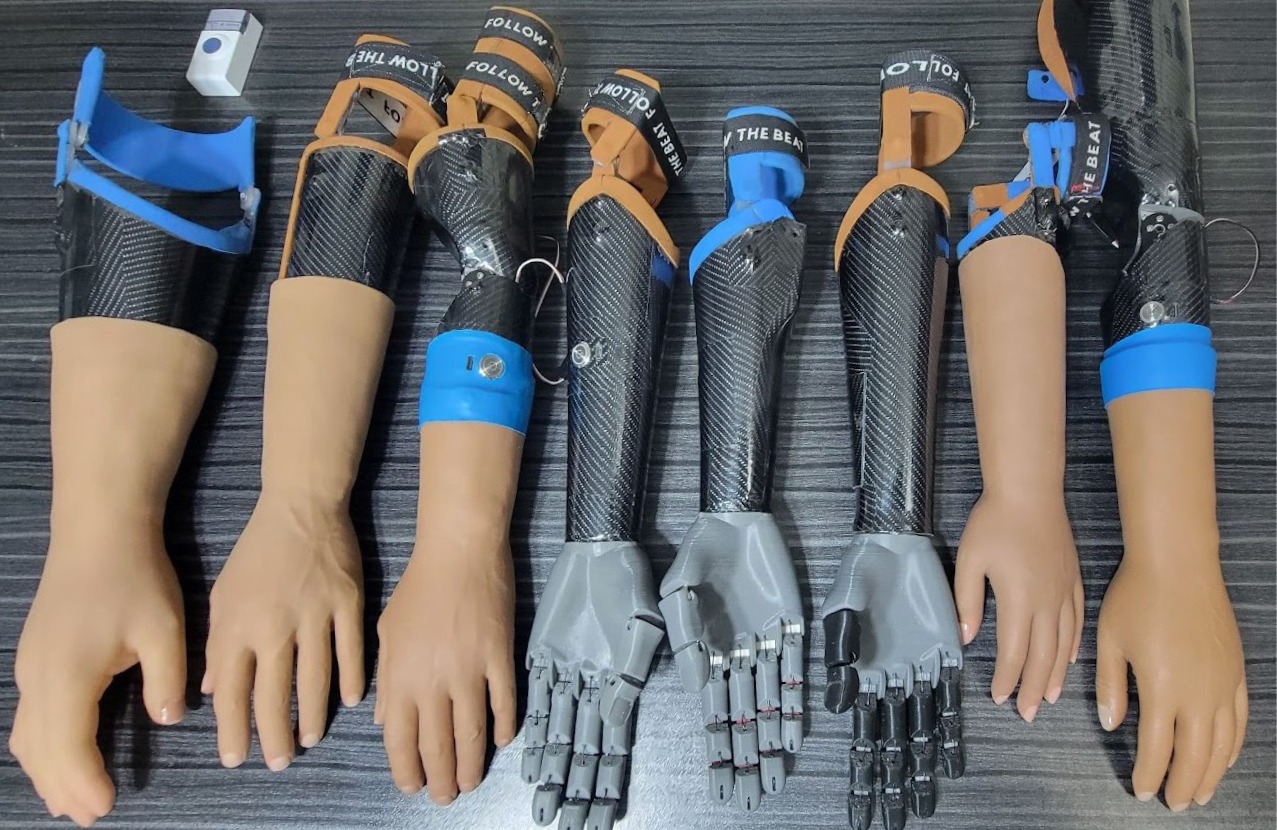
See our prosthetic arm prototype through various stages of development.
Technology transforms prosthetics into adaptable, responsive extensions of human body rather than passive mechanical tools.
Ensures mental well-being, physical ability, and confidence. Patient trials confirmed grip, strength, and usability are suitable for everyday interactions. Users can earn and do their jobs.
Millions
Potential to transform millions of patients with upper limb amputation worldwide through affordable technology.
Increases reach of functional prosthetics to millions of upper limb amputation patients. Potential to boost labor market participation, decrease healthcare costs, and enhance social integration.
Global
B2B2C model through hospitals, rehabilitation centers, NGOs, and government programs.
Prosthetic limb market worth several billions of dollars worldwide and still expanding. Great chance for widespread adoption with a low-cost system.
3 • 8 • 10
UN SDGs: Good Health, Reduced Inequalities, Decent Work
Users reached in Bangladesh region with target price $850
Users reached in South Asia with target price $650
Users reached with target price $500
Worldwide users reached with target price <$300
Interested in our solution? Want to partner or support our mission?
We'll respond within 24 hours
Location
Sylhet, Bangladesh
Hospitals & Clinics
Collaborate for testing and distribution to patients
NGOs & Organizations
Work together to reach underserved populations
Investors & Grants
Support our mission with funding and resources
Initial Capital
$25,000-$30,000
For hardware enhancement, AI algorithm development, 20-30 prototypes, user testing, and rollout.